Designing for Cognitive Load: How Simpler Systems Are Becoming the New Accessibility Frontier5/28/2026 Identity in Transition: How Men Are Redefining Success Beyond Job Titles in a Changing Economy4/20/2026 The modern workforce is undergoing a structural shift that is changing how people build careers and define professional value. In the past, deep specialization in a single field was often enough to secure long term employment and upward mobility. Today, however, the rise of automation, digital platforms, and rapidly evolving industries has made single expertise less sufficient on its own. For Gen Z, career success is increasingly defined by the ability to build a “skill stack,” a combination of complementary capabilities that together create adaptability and opportunity in a fast changing economy.
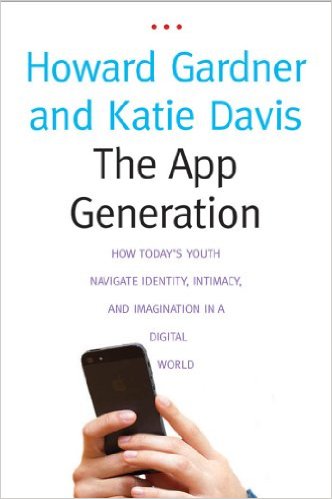
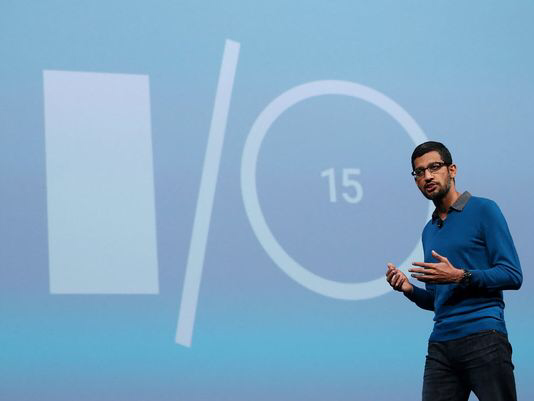
From Specialists to Skill StacksA skill stack is the layered combination of abilities that allows individuals to operate effectively across different roles and contexts. Rather than relying on one deep area of expertise, Gen Z professionals are combining multiple competencies such as digital literacy, communication, data interpretation, creative thinking, and technical proficiency. This shift reflects a broader change in how work is structured. Many modern roles require cross functional thinking. A marketer is expected to understand analytics. A designer is expected to understand user behavior data. A project manager is expected to navigate digital tools and team dynamics simultaneously. The boundaries between roles are increasingly fluid, and those who can integrate multiple skills are better positioned to succeed. Why Single Expertise Is Becoming Less PredictableSpecialization is still valuable, but it is no longer sufficient in isolation. Automation is reducing the demand for repetitive, narrowly defined tasks. At the same time, new technologies are continuously reshaping job requirements. A skill that is highly valuable today may require significant adaptation within a few years. This volatility makes single expertise less stable as a long term career foundation. Professionals who rely on one skill set risk becoming misaligned with evolving industry needs. In contrast, those with a diverse skill stack can shift roles, apply their abilities in new contexts, and remain relevant even as specific tools or processes change. How Gen Z Builds Skill StacksGen Z is uniquely positioned to thrive in this environment because of how they approach learning and career development. Many are not waiting for formal education systems or employers to dictate their skill paths. Instead, they are actively building capabilities through online learning platforms, freelance work, internships, and self directed projects. For example, a content creator might combine video editing, storytelling, marketing strategy, and audience analytics. A software developer might add communication, product design awareness, and business understanding. Each additional skill increases flexibility and expands the range of opportunities available. Importantly, these skills are often developed in parallel rather than sequentially. Learning is continuous and integrated into daily work and side projects, creating a dynamic and evolving professional profile. The Competitive Advantage of IntegrationThe true value of a skill stack lies not just in the number of skills, but in the ability to integrate them effectively. Employers increasingly seek individuals who can connect ideas across disciplines, solve complex problems, and adapt quickly to changing priorities. This integrative ability allows Gen Z professionals to move fluidly between roles and industries. It also supports entrepreneurship, as individuals with diverse skill sets can manage multiple aspects of a business without relying heavily on external specialists in the early stages. Looking AheadThe skill stack economy represents a fundamental shift in how careers are built. Rather than climbing a linear ladder based on a single area of expertise, Gen Z is constructing layered, adaptable profiles that reflect the complexity of the modern workforce. In this new environment, long term career resilience depends less on mastering one discipline and more on the ability to continuously learn, combine skills, and apply them in new and evolving ways. The professionals who thrive will be those who see their careers not as fixed paths, but as evolving systems of interconnected capabilities. Originally posted on https://medium.com/@russewell Invisible Infrastructure: How Accessibility Design Is Quietly Reshaping Everyday Urban Life4/20/2026 Leadership is always on my mind. There are so many great leaders today, who are not leading countries, people like Sundar Pichai. about whom I wrote a profile which can be found here. Another great leader is Bono of the legendary band U2. He was recently placed on Fortune's 50 greatest leaders list. Fortune describes the Rock legend in this way. Irish rock icon Bono leads a widely acclaimed, data-driven, global organization that influences governments, rallies C-suites, and raises hundreds of millions of dollars for people living in poverty. What’s his secret? An ability to convince others that they are the true leaders of change, not him. Here’s what business can learn from a music legend. The incredible inspiration of Bono is rather than being a simple superficial music star, he has set an example as a deeply self aware, compassionate, and inspiring leader capable of mobilizing the world to do good. The world could use more like him. Enjoy the entire profile here. Get an up close look at his passionate dynamism in his Ted Talk below. "Let me tell you something you already know. The world ain't all sunshine and rainbows. It's a very mean and nasty place and I don't care how tough you are it will beat you to your knees and keep you there permanently if you let it. You, me, or nobody is gonna hit as hard as life. But it ain't about how hard ya hit. It's about how hard you can get hit and keep moving forward. How much you can take and keep moving forward. That's how winning is done!" Rocky 6 creates a theatrical teaching moment when Rocky reads his son in on the facts of life. "But it ain't about how hard ya hit. It's about how hard you can get hit and keep moving forward." Then he hits the line, which for me is the facts of life line, "That's how winning is done!" No matter how anyone feels about the Rocky series, this lesson of life is a priceless take away. My recommendation for today comes from my own investigation and writing. I recently published "10 Parenting Tips for The Digital Age" on Medium. This came together after reviewing a New York Times article by Nick Bilton, who interviewed several parents in the technology industry. In addition, I consulted a valuable book in my library, "The App Generation." Here is a highlight from the article which you can read in it's entirety here.
"At the same time, there is nothing fun about being called controlling, or having other parents considered superior to ourselves. There is a weariness that sets in when we are constantly told, “none of my friends have these rules,” or this choice comparative, “all of my friends parents have given them iPhones.” Parenting is not for the insecure or weak minded. We will be called fascist or negatively compared to permissive parents. Nevertheless, we must focus on what is best for our kids in the long term not how we feel in the short term." |
AuthorRuss Ewell is CEO Digital Scribbler, the creators of Quick Talk AAC; Founder HTG, Founder E-Soccer. "Using technology to overcome human limits." Archives
May 2026
Categories
All
|
RSS Feed